August 18, 2026
Building SaaS in Puerto Rico
What it actually feels like to build software from an island context—constraints, proximity to real businesses, and why that can be an advantage.

Puerto Rico is not Silicon Valley, and that is not a weakness.
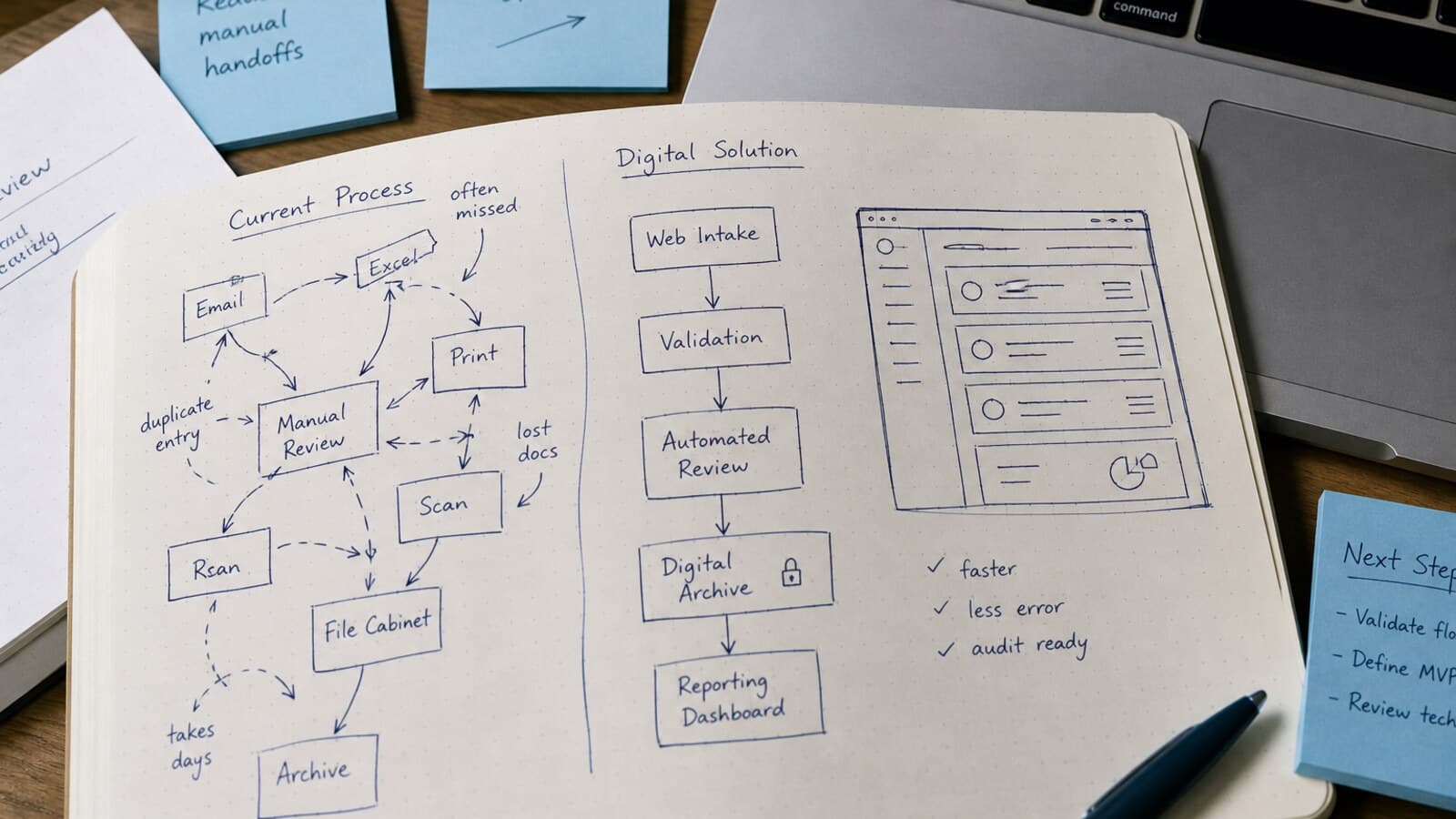
When you build software here, you are usually close to the problem. You hear how a service business runs. You see where WhatsApp becomes the CRM. You notice how estimates live in folders, how invoices wait for someone to remember them, and how operations become a chain of improvisation.
That proximity matters.
Local constraints create clearer products
Building from Puerto Rico forces a certain honesty:
- bandwidth and attention are limited
- tools have to work for people who are busy running a company
- complexity that looks impressive in a demo collapses in daily operations
So the question becomes simpler: what should the software make easier tomorrow morning?
Not “what can the stack do.”
Not “what looks modern.”
What removes friction for the person actually doing the work.
The advantage of building close to operations
When you sit with business owners regularly, patterns appear.
Different industries. Different customers. Same structural problems:
- information scattered across tools
- follow-up that depends on memory
- processes that live in people’s heads
- handoffs that fail quietly
Those patterns are product clues.
EDERON did not appear as an abstract idea. It grew from watching the same operational gaps repeat, then asking whether software could absorb them cleanly.
Build for reality, not for the pitch deck
SaaS built from Puerto Rico can be globally relevant precisely because it has to survive local reality first.
If a system works for a busy service business with messy inputs, incomplete information, and real customers waiting, it has a better chance of being useful elsewhere.
That is the standard I want to build against.